This article contains affiliate links. As an Amazon Associate, I earn from qualifying purchases at no extra cost to you.
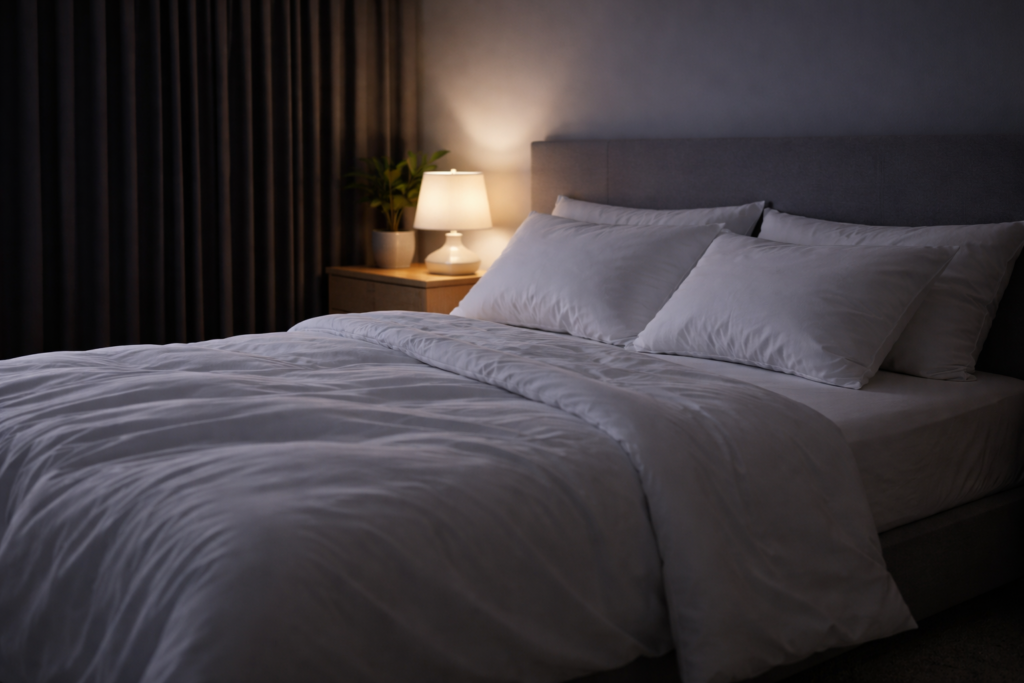
If your room isn’t completely dark at night, your sleep is likely being affected more than you realize. Even small amounts of light from street lamps, electronics, or early morning sunlight can interfere with your body’s ability to rest properly.
Your body depends on darkness to produce melatonin, the hormone that signals it’s time to sleep. When light enters your environment, even in small amounts, your brain can interpret it as a signal to stay alert. This can lead to difficulty falling asleep, frequent wake-ups, and lower overall sleep quality.
Many people focus on mattresses or pillows when trying to improve their sleep, but lighting is one of the most overlooked factors. Blackout curtains provide one of the simplest and most effective ways to create a consistent, dark sleep environment.
If your setup isn’t fully optimized yet, it may also help to explore how to create the perfect sleep environment complete setup guide, since your room plays a major role in sleep quality.
Why Darkness Is Essential for Deep Sleep
Your body follows a natural rhythm that is closely tied to light and darkness. When your environment becomes dark, your brain increases melatonin production, helping your body transition into sleep.
When light is present, even in small amounts, this process is disrupted.
• Light Signals Your Brain To Stay Alert
• Melatonin Production Is Reduced
• Sleep Becomes Lighter And More Fragmented
• You Wake Up More Easily
This is why even a small light source in your room can prevent deep, restorative sleep. Creating complete darkness allows your body to stay in a more stable sleep cycle throughout the night.
Best Blackout Curtains for Maximum Light Blocking
If your main goal is to eliminate outside light completely, you need curtains designed specifically for full coverage and insulation.
A strong option is blackout curtains for bedroom with full light blocking and thermal insulation, which are designed to block nearly all external light sources.
These curtains are especially useful if you live in a bright urban area, have streetlights outside your window, or need to sleep during daylight hours. When installed properly, they can create a near pitch-black environment that significantly improves sleep consistency.
Why Proper Fit Matters More Than You Think
Many people install blackout curtains but still experience light leakage. This usually happens because of poor fit rather than poor quality.
Even small gaps around the edges can allow light to enter your room.
• Curtains Should Extend Beyond Window Edges
• Floor-Length Coverage Helps Prevent Light Gaps
• Wider Panels Improve Full Coverage
• Proper Rod Placement Reduces Top Light Leakage
Without proper coverage, even high-quality blackout curtains will not perform as expected. Ensuring a tight fit is just as important as the material itself.
Alternative Solution: Sleep Masks for Complete Darkness
If blackout curtains are not practical or you need a portable solution, sleep masks provide a simple and effective alternative.
Using something like sleep mask for complete darkness and better sleep quality allows you to block light directly at your eyes, regardless of your environment.
This is especially useful when traveling, sharing a room, or sleeping in places where you cannot control lighting conditions.
If you want a more detailed breakdown, it may also help to explore best sleep masks for complete darkness block light and sleep better.
How Indoor Lighting Still Disrupts Sleep
Even if your room is dark, indoor lighting before bed can still interfere with your sleep cycle.
Bright lights, especially those from screens, delay melatonin production and make it harder to fall asleep.
• Blue Light From Screens Delays Sleep Signals
• Bright Overhead Lights Keep You Alert
• Inconsistent Lighting Confuses Your Body Clock
Reducing light exposure before bed is just as important as blocking outside light.
To improve your setup, it may help to explore best lighting for better sleep what to avoid at night.
Why Temperature and Darkness Work Together
A dark room alone is not enough if your environment is uncomfortable. Temperature plays a major role in sleep quality and can either support or disrupt your sleep.
• Cooler Temperatures Promote Better Sleep
• Overheating Leads To Restlessness
• Airflow Helps Maintain Comfort
Combining blackout curtains with a cooler environment helps your body stay relaxed throughout the night.
If temperature is an issue, it may also help to explore best bedroom temperature for deep sleep.
Common Mistakes That Reduce Effectiveness
Even with blackout curtains, certain mistakes can prevent them from working properly.
• Leaving Gaps Around Curtains
• Choosing Thin Or Low-Quality Materials
• Ignoring Indoor Lighting Habits
• Not Covering The Entire Window Area
Fixing these issues often leads to immediate improvements in sleep quality.
Who Blackout Curtains Are Best For
Blackout curtains are ideal for people who are sensitive to light or struggle to maintain consistent sleep.
• Light-Sensitive Sleepers
• People Living In Bright Areas
• Night Shift Workers
• Those Who Wake Up Too Early
If light is disrupting your sleep, blackout curtains can be one of the most effective upgrades you can make.
How to Get the Best Results
To maximize the benefits of blackout curtains, they should be part of a complete sleep setup.
• Combine With A Consistent Sleep Routine
• Reduce Light Exposure Before Bed
• Maintain A Comfortable Temperature
• Use Additional Sleep Aids If Needed
For a more complete approach, combining this with guidance from how to fall asleep faster naturally without medication can significantly improve your sleep quality.
When Blackout Curtains Alone Are Not Enough
While blackout curtains are highly effective, they are not a complete solution for every sleep issue.
If your sleep problems come from stress, inconsistent routines, or discomfort, additional changes will be needed.
Creating a full sleep system that includes environment, habits, and support products will always produce better results than relying on a single solution.