This article contains affiliate links. As an Amazon Associate, I earn from qualifying purchases at no extra cost to you.
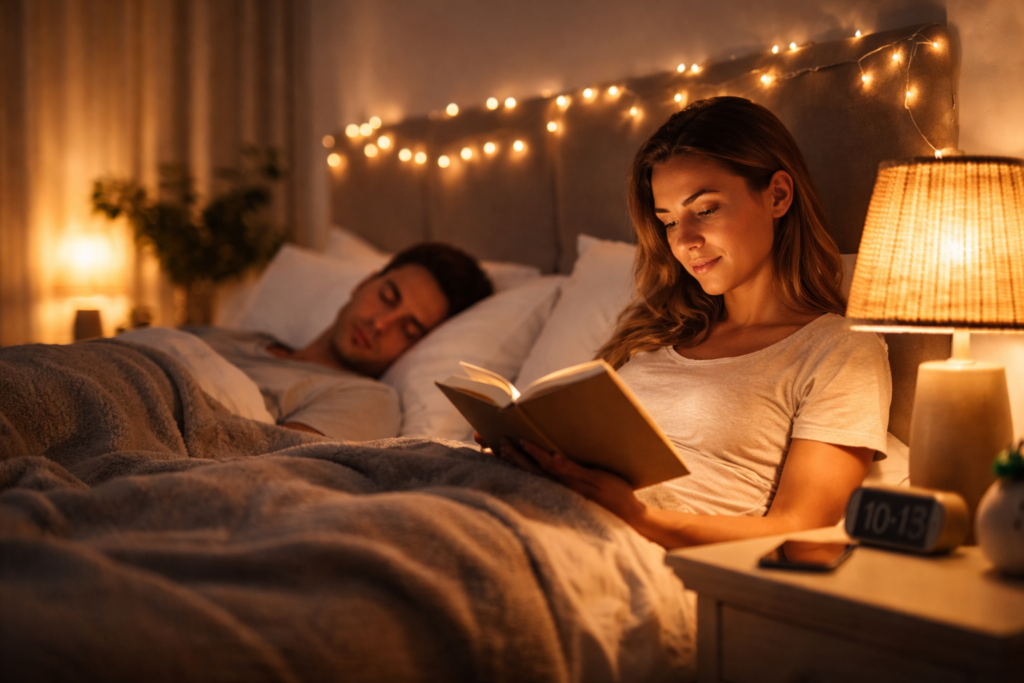
Lighting has a powerful effect on your sleep, even if you don’t notice it right away. The type of light you’re exposed to in the evening directly affects how quickly you fall asleep and how deeply you stay asleep.
Your body relies on light signals to regulate its internal clock. When those signals are disrupted, your ability to fall into deep, restorative sleep becomes much harder.
Fixing your lighting is one of the simplest and most effective ways to improve your sleep quality.
If your overall setup isn’t optimized yet, this guide on how to create the perfect sleep environment complete setup guide explains how everything works together.
Light Tells Your Body When to Be Awake or Asleep
Your body relies on light to regulate its internal clock.
Exposure to light signals that it’s time to stay alert.
Darkness signals that it’s time to prepare for sleep.
This process directly affects the release of melatonin, the hormone that helps you fall asleep.
When light exposure is not aligned with your sleep schedule, your body receives mixed signals.
This is one of the main reasons people struggle to fall asleep even when they feel tired.
Why Bright Light at Night Delays Sleep
Exposure to bright light in the evening keeps your brain alert.
Even indoor lighting can be strong enough to affect your sleep.
When your body is exposed to light at night:
• Melatonin production is delayed
• Your brain stays in a more alert state
• Falling asleep takes longer
This is why using bright lights late in the evening often makes sleep feel harder than it should be.
The Difference Between Helpful and Disruptive Light
Not all light affects your sleep in the same way.
Cool, bright light tends to stimulate alertness.
Warm, dim light supports relaxation.
This is why lighting choice matters, not just whether lights are on or off.
Adjusting the type of light you use in the evening can significantly change how your body prepares for sleep.
Why Screens Have a Stronger Impact Than You Think
Screens are one of the most common sources of disruptive light.
They emit light that closely mimics daylight.
This signals your brain to stay awake.
Using screens late in the evening is one of the most common reasons people struggle to fall asleep.
Reducing screen exposure before bed is one of the most effective ways to improve sleep timing.
Why Lighting Matters for Sleep
Your brain uses light exposure to control melatonin, the hormone responsible for sleep.
Bright or blue light in the evening delays melatonin production, making your body think it’s still daytime.
• Bright Lights Keep You Alert
• Blue Light Delays Sleep Signals
• Dim Light Helps Your Body Relax
Even small changes in lighting can significantly affect how quickly you fall asleep and how deeply you stay asleep.
If you struggle to fall asleep at night, this guide on why you can’t fall asleep even when you’re tired explains how multiple factors combine to create that problem.
The Best Types of Lighting for Nighttime
In the evening, your goal is to reduce stimulation and help your body prepare for sleep.
This doesn’t mean sitting in complete darkness, but it does mean changing the type and intensity of light you use.
• Warm, Soft Lighting
• Low Light Levels
• Indirect Light Sources
Avoid harsh, bright lighting as bedtime approaches, especially overhead lights that directly hit your eyes.
Using night lights that won’t disrupt your sleep can help provide visibility without interfering with melatonin production.
What to Avoid Before Bed
Some lighting habits make it much harder to fall asleep, even if everything else is right.
• Overhead Bright Lights
• Phone and Screen Exposure
• Cool White or Blue Light
Screens are one of the biggest problems. Phones, tablets, and TVs emit blue light that keeps your brain alert.
Even short exposure before bed can delay sleep and reduce sleep quality.
Many of these habits are also covered in 10 habits that are destroying your sleep quality.
How to Create a Sleep-Friendly Lighting Setup
Improving your lighting doesn’t require major changes. Small adjustments can have a big impact.
• Dim Lights 60 Minutes Before Bed
• Use Lamps Instead of Overhead Lights
• Reduce Screen Exposure Gradually
Your goal is to slowly signal your body that nighttime is approaching.
Lighting should work with your body, not against it.
If your sleep schedule is inconsistent, lighting alone won’t fix everything. This guide on why you should go to bed at the same time every night explains why consistency is just as important.
How Screen Use Affects Your Sleep More Than You Think
Screens are one of the biggest sources of disruptive light before bed.
Phones, tablets, and TVs emit blue light that suppresses melatonin and keeps your brain alert. Even if you feel tired, your body receives signals to stay awake.
Reducing screen exposure at least 30 to 60 minutes before bed can significantly improve how quickly you fall asleep and how deeply you stay asleep.
Light Control During the Night Matters Too
Even after you fall asleep, light can still affect your sleep quality.
Your brain remains sensitive to light throughout the night, even if you don’t fully wake up.
• Street Light Exposure
• Electronics With Bright Displays
• Early Morning Light
These small disruptions can pull you out of deeper sleep stages.
Using sleep mask for complete darkness block light and sleep better can help maintain consistent darkness and prevent interruptions.
Balance Lighting With Other Sleep Factors
Lighting is just one part of your sleep environment.
If temperature, noise, or habits are off, your sleep can still suffer.
If temperature is also an issue, this guide on best bedroom temperature for deep sleep explains how to optimize that part of your setup.
Lighting Affects Your Entire Sleep Cycle
Light doesn’t just affect when you fall asleep.
It influences how your entire sleep cycle behaves.
If your body receives inconsistent light signals:
• Sleep becomes less predictable
• You may wake up more during the night
• You may feel less refreshed in the morning
This is why lighting plays a bigger role in sleep quality than most people expect.
Small Lighting Changes Can Improve Sleep Quickly
Lighting is one of the fastest things you can fix.
When your environment supports your body’s natural rhythm, falling asleep becomes easier and staying asleep becomes more consistent.
You don’t need perfect conditions. You just need the right signals working in your favor.
Improving your lighting is one of the simplest changes you can make.
When your environment supports natural light patterns, your body begins to follow a more stable rhythm.
This makes falling asleep and staying asleep easier over time.
Why This Change Often Feels Immediate
Unlike some sleep improvements that take time, lighting changes can produce noticeable results quickly.
When you reduce bright light at night and allow darkness to signal sleep, your body responds almost immediately.
This is why adjusting lighting is one of the most effective and overlooked ways to improve sleep.