
This article contains affiliate links. As an Amazon Associate, I earn from qualifying purchases at no extra cost to you.
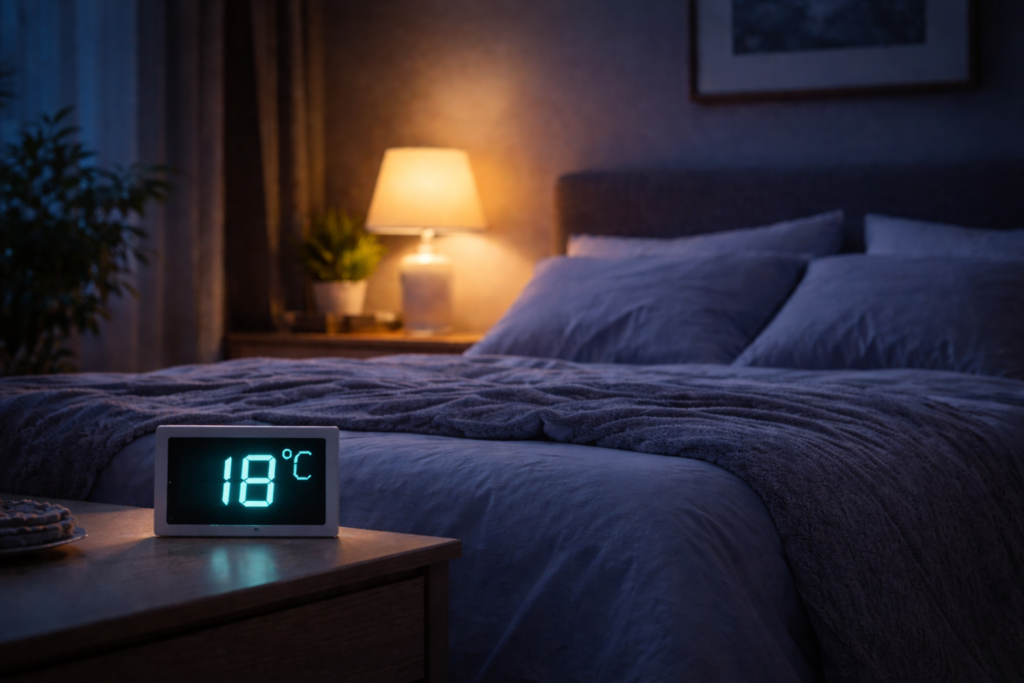
The temperature of your bedroom plays a major role in how well you sleep. Even if everything else is right, a room that’s too hot or too cold can make it harder to fall asleep and stay asleep.
Your body naturally lowers its core temperature as it prepares for sleep. If your environment doesn’t support that process, your sleep quality suffers.
Finding the right temperature can make a noticeable difference in how quickly you fall asleep and how rested you feel in the morning.
If your sleep environment isn’t fully optimized, this guide on how to create the perfect sleep environment complete setup guide explains how all factors work together.
Your Body Needs to Cool Down to Sleep Properly
Sleep doesn’t start just because you lie down.
It starts when your body begins to cool down.
This drop in body temperature is one of the main signals that tells your body it’s time to sleep.
If your environment is too warm, this process becomes harder.
As a result, falling asleep takes longer and staying asleep becomes less stable.
Temperature is not a small detail.
It directly affects how easily your body can enter and maintain sleep.
Why a Warm Room Disrupts Your Sleep More Than You Think
A room that feels slightly too warm can have a bigger impact than most people expect.
When your body can’t cool down efficiently:
• Falling asleep becomes slower
• Sleep becomes lighter and more fragmented
• You are more likely to wake up during the night
This is one of the most common reasons people experience restless sleep without realizing why.
Even small temperature changes can make a noticeable difference.
The Ideal Temperature Range for Deep Sleep
Most people sleep best in a room that is slightly cool.
In general:
• Around 60 to 67°F (15 to 19°C) works best for most people
This range supports your body’s natural cooling process.
If your room is significantly warmer than this, your sleep quality will almost always decrease.
That said, comfort still matters.
The goal is to create an environment that feels cool, but not uncomfortable.
Why You Wake Up in the Middle of the Night When It’s Too Warm
Waking up during the night is often linked to temperature.
As your body moves through different sleep stages, it becomes more sensitive to your environment.
If the room is too warm, your body struggles to stay in deeper sleep.
This increases the chances of waking up, even if you don’t fully realize the cause.
This is one of the main reasons people experience disrupted sleep without an obvious explanation.
The Ideal Temperature Range for Sleep
Most experts agree that the best bedroom temperature for sleep falls between 60–67°F (15–19°C).
This range supports your body’s natural cooling process, helping you fall asleep faster and stay asleep longer.
• Too Hot → Restless Sleep
• Too Cold → Difficulty Relaxing
• Balanced Temperature → Deeper Sleep
Even small temperature changes can affect your sleep quality.
Why Temperature Affects Your Sleep
Your body temperature naturally drops at night as part of your sleep cycle.
If your room is too warm, your body struggles to cool down. If it’s too cold, your body may stay tense.
Both situations make it harder to reach deep, restorative sleep.
This is one of the most overlooked factors in sleep quality.
Signs Your Bedroom Temperature Is Off
You may not always notice temperature issues directly, but your body will.
• Waking Up Sweaty
• Tossing And Turning
• Waking Up Frequently
• Feeling Too Hot or Too Cold
If these symptoms sound familiar, your room temperature may be affecting your sleep.
If you’re also waking up tired, this guide on why you wake up tired even after 8 hours explains how sleep quality plays a role.
How to Adjust Your Bedroom Temperature
Creating the right environment doesn’t always require major changes. Small adjustments can make a big difference.
• Lower Your Thermostat at Night
• Use Breathable Bedding
• Improve Air Circulation
• Block Heat from Entering the Room
If your room traps heat, it becomes harder for your body to cool down.
Using cooling bed sheets for hot sleepers stay cool all night can help regulate your body temperature and prevent overheating during sleep.
Your Bedding Matters More Than You Think
Your mattress, sheets, and blankets all affect how your body regulates heat.
Heavy or non-breathable materials can trap heat and disrupt your sleep.
• Choose Lightweight, Breathable Fabrics
• Avoid Heat-Retaining Materials
• Adjust Layers Based on Season
Your bedding should support your body’s natural cooling process, not work against it.
If your mattress retains heat, this guide on best mattress for hot sleepers stay cool all night explains what to look for.
Balance Temperature with Other Sleep Factors
Temperature works together with other elements like light, noise, and routine.
Even if your temperature is perfect, other disruptions can still affect your sleep.
If your sleep is interrupted during the night, this guide on why you wake up in the middle of the night explains what may be causing it.
Temperature Affects More Than Just Comfort
Many people think temperature is just about comfort.
In reality, it affects your sleep at a biological level.
If your body can’t regulate temperature properly during the night:
• Sleep becomes less restorative
• You spend less time in deeper sleep stages
• You wake up feeling less refreshed
This is why optimizing temperature can improve sleep more than expected.
Small Changes Can Improve Your Sleep Quickly
Temperature is one of the easiest things to fix, but also one of the most impactful.
Once your environment supports your body’s natural rhythm, falling asleep becomes easier and staying asleep becomes more consistent.
You don’t need perfect conditions. You just need the right balance.
Adjusting your bedroom temperature is one of the simplest ways to improve your sleep.
Unlike many other changes, it produces immediate results.
When your environment supports your body’s natural cooling process, sleep becomes easier and more consistent.
Why This One Change Often Improves Sleep Quickly
Some sleep improvements take time.
Temperature is different.
When your environment is too warm, your sleep is disrupted every night.
When you correct it, the improvement is often noticeable right away.
This is why adjusting temperature is one of the most effective and overlooked changes you can make.