
This article contains affiliate links. As an Amazon Associate, I earn from qualifying purchases at no extra cost to you.
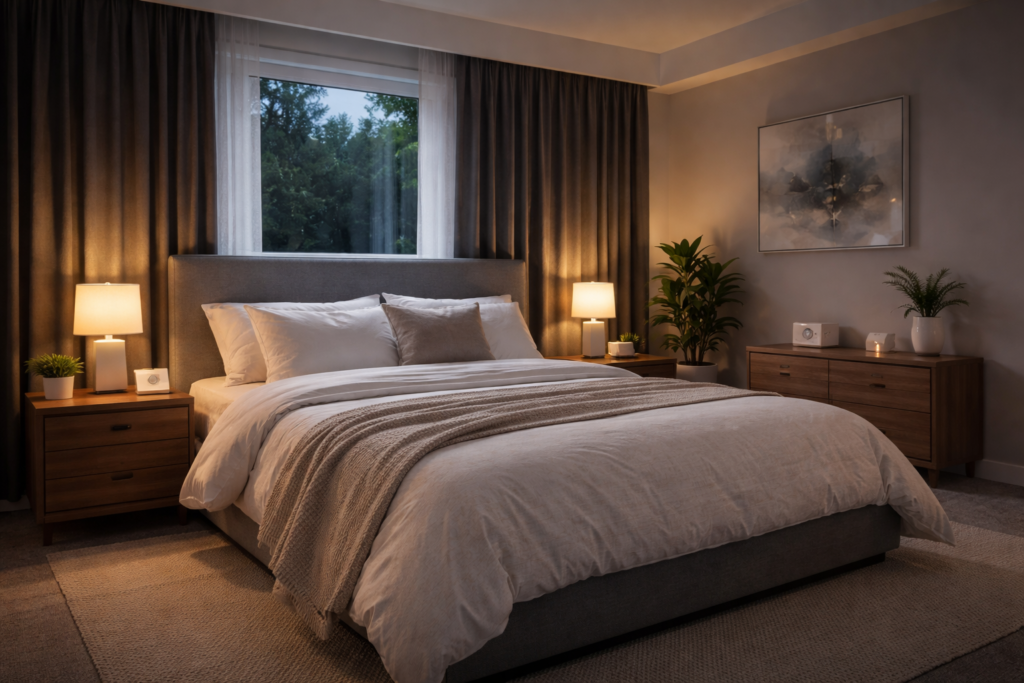
Your sleep environment plays a bigger role in your sleep quality than most people realize. You can have the perfect routine and still struggle to sleep if your bedroom setup is working against you. Light, temperature, noise, comfort, and even air quality all influence how well your body can relax at night.
The goal is simple: create a space that signals your brain it is time to sleep. When your environment supports your body’s natural sleep rhythm, falling asleep becomes easier and staying asleep becomes more consistent.
If your sleep feels inconsistent, this guide on why your bedroom setup is ruining your sleep and how to fix it explains common issues.
Control Light for Better Sleep
Light is one of the strongest signals that affects your sleep cycle. Exposure to light at night suppresses melatonin, making it harder for your body to fall asleep.
Creating a dark environment is one of the most effective ways to improve sleep.
• Use Blackout Curtains to Block External Light
• Avoid Bright Overhead Lighting Before Bed
• Reduce Screen Exposure at Night
If lighting is an issue, this guide on best lighting for better sleep what to avoid at night explains what to change.
Using blackout curtains for complete darkness and improved sleep quality helps eliminate light disruptions.
Optimize Temperature for Comfort
Your body naturally cools down before sleep. If your room is too warm, this process is disrupted, making it harder to fall asleep and stay asleep.
Keeping your bedroom cool improves comfort and sleep quality.
• Ideal Temperature Range Around 18–20°C
• Use Breathable Bedding
• Improve Air Circulation
If temperature is affecting your sleep, this guide on best bedroom temperature for deep sleep explains how to optimize it.
Reduce Noise Disruptions
Noise can interrupt your sleep even if you do not fully wake up. Sudden sounds are especially disruptive because your brain remains alert to changes in your environment.
Creating consistent background sound can help.
• Use White Noise to Mask Sounds
• Reduce External Noise Sources
• Create a Stable Sound Environment
If noise is an issue, this guide on best white noise machines for deep uninterrupted sleep explains what to use.
Using white noise machine for consistent sound masking and deeper sleep helps reduce disruptions.
Choose the Right Mattress and Pillow
Your bed is the foundation of your sleep environment. If your mattress or pillow does not support your body properly, it can lead to discomfort and poor sleep.
Proper alignment is essential.
• Choose a Mattress That Supports Your Sleep Position
• Use a Pillow That Keeps Your Neck Aligned
• Replace Worn-Out Bedding
If your setup needs improvement, this guide on best pillows for neck pain relieve pressure and improve sleep explains what to look for.
Improve Air Quality and Humidity
Air quality affects how easily you breathe during sleep. Dry air can irritate your throat and nasal passages, while poor air quality can cause discomfort.
Balancing air quality improves sleep comfort.
• Use a Humidifier for Dry Air
• Improve Ventilation
• Reduce Allergens
If breathing is an issue, this guide on best humidifiers for better breathing and sleep quality explains what to use.
Using humidifier for balanced air moisture and improved breathing during sleep helps create a more comfortable environment.
Keep Your Bedroom Clean and Organized
A cluttered or messy bedroom can increase stress and make it harder to relax. Your environment should feel calm and organized to support better sleep.
Clean spaces help your mind settle down.
• Keep Surfaces Clear
• Maintain Clean Bedding
• Reduce Visual Clutter
If your room feels overwhelming, this guide on why a clean bedroom improves sleep quality explains why it matters.
Use Color and Design to Promote Relaxation
The colors and design of your bedroom can influence how relaxed you feel. Soft, neutral tones tend to promote calmness, while bright or intense colors can be stimulating.
Creating a calming space helps prepare your mind for sleep.
• Use Neutral or Warm Colors
• Avoid Bright, Stimulating Designs
• Keep Decor Minimal
If color plays a role, this guide on best colors for a calming bedroom sleep space explains what to choose.
Create a Consistent Sleep Setup
Consistency is key when it comes to sleep. Your environment should feel the same every night so your brain can associate it with rest.
Small inconsistencies can disrupt your routine.
• Keep Lighting Consistent
• Maintain Temperature Stability
• Stick to a Routine
Consistency helps your body transition into sleep more easily.
Better Environment Leads to Better Sleep
Your sleep environment is one of the most powerful tools for improving your sleep quality. When all elements work together, your body can relax naturally and stay asleep longer.
Improving your environment does not require drastic changes. Small adjustments in light, temperature, noise, and comfort can lead to significant improvements in how well you sleep.