
This article contains affiliate links. As an Amazon Associate, I earn from qualifying purchases at no extra cost to you.
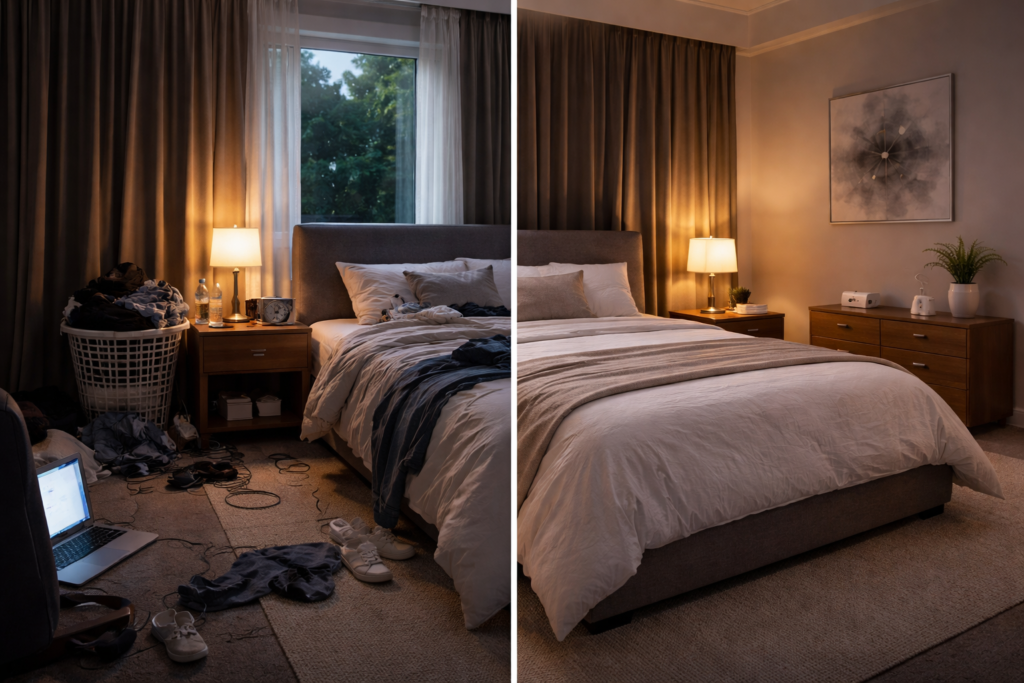
If you struggle to fall asleep, wake up during the night, or feel tired in the morning, your bedroom setup could be the main reason. Many people focus on routines and habits but overlook the environment they sleep in every night.
Your brain is constantly reacting to your surroundings. Light, temperature, noise, and comfort all send signals that either help you relax or keep you alert. If your bedroom is not optimized for sleep, it can quietly work against you without you realizing it.
The good news is that small changes can make a big difference.
Your Bedroom Might Be Working Against You
Most people assume their bedroom supports their sleep.
In reality, it often does the opposite.
Small details in your environment can keep your brain alert without you realizing it.
Because these issues are subtle, they’re easy to ignore.
But over time, they make sleep harder and less consistent.
Sleep Problems Often Come From What You Don’t Notice
Many sleep disruptions are not obvious.
They come from things you’ve gotten used to.
Lighting, noise, clutter, and layout all send signals to your brain.
If those signals are inconsistent or stimulating, your body doesn’t fully relax.
This is one of the main reasons people struggle with sleep despite doing everything else right.
Why Your Brain Stays Alert in the Wrong Environment
Your brain is constantly scanning your surroundings.
If your environment feels active, your brain stays engaged.
This includes:
• Bright or inconsistent lighting
• Visual clutter
• Background noise
• Screens within reach
These factors signal that the space is not fully dedicated to rest.
As a result, your body doesn’t fully switch into sleep mode.
The Problem Isn’t One Thing, It’s the Combination
Most people look for a single cause.
In reality, sleep issues often come from multiple small factors working together.
Each one may seem minor.
But together, they create an environment that keeps your brain slightly active.
This is why fixing just one element often doesn’t lead to noticeable improvement.
Too Much Light Is Disrupting Your Sleep
Light is one of the strongest signals your brain responds to. Even small amounts of light at night can reduce melatonin production, making it harder to fall asleep and stay asleep.
Streetlights, electronics, and early morning sunlight are common sources.
• Light Delays Sleep Signals
• Reduces Melatonin Production
• Causes Frequent Wake-Ups
If lighting is an issue, this guide on best lighting for better sleep what to avoid at night explains what to fix.
Your Room Temperature Is Not Ideal
Your body needs a cooler environment to fall asleep. If your room is too warm, it prevents your body from entering a relaxed state.
This can lead to restlessness and interrupted sleep.
• Warm Rooms Disrupt Sleep
• Cooler Temperatures Promote Relaxation
• Comfort Affects Sleep Depth
If temperature is affecting your sleep, this guide on best bedroom temperature for deep sleep explains the ideal range.
Noise Is Keeping Your Brain Alert
Even if you do not fully wake up, noise can keep your brain in a lighter stage of sleep. Sudden sounds are especially disruptive because your brain is constantly monitoring your environment.
Creating a stable sound environment helps improve sleep.
• Sudden Noise Causes Micro-Wake-Ups
• Inconsistent Sound Disrupts Sleep
• Quiet or Controlled Noise Works Best
Using white noise machine for consistent sound masking and uninterrupted sleep helps reduce noise disruptions.
If noise is an issue, this guide on best white noise machines for deep uninterrupted sleep explains what to use.
Your Mattress and Pillow Are Not Supporting You
Your bed is the foundation of your sleep. If your mattress or pillow does not support your body properly, it can lead to discomfort, poor alignment, and frequent wake-ups.
Support and comfort go hand in hand.
• Poor Support Causes Discomfort
• Misalignment Leads to Pain
• Worn Bedding Reduces Sleep Quality
If your pillow may be the issue, this guide on best pillows for neck pain relieve pressure and improve sleep explains what to look for.
Your Bedroom Feels Cluttered or Stressful
A messy or cluttered bedroom can increase stress and make it harder to relax. Your environment should feel calm and organized to support better sleep.
Visual clutter can keep your mind active even when you are tired.
• Clutter Increases Stress
• Clean Spaces Promote Relaxation
• Organization Improves Focus
If your room feels overwhelming, this guide on why a clean bedroom improves sleep quality explains why it matters.
You Are Not Creating a Consistent Sleep Environment
Consistency is key when it comes to sleep. If your environment changes frequently, your brain does not associate your bedroom with rest.
A stable setup helps your body transition into sleep more easily.
• Keep Lighting Consistent
• Maintain Temperature Stability
• Stick to a Routine
Small inconsistencies can make sleep harder.
Why Your Sleep Improves When Your Environment Changes
When your bedroom begins to support rest instead of activity, your body responds quickly.
This is because your brain no longer has to filter out conflicting signals.
A calm, consistent environment allows your body to transition into sleep more easily.
This shift often improves sleep without needing major lifestyle changes.
Small Fixes Can Transform Your Sleep
Your bedroom setup does not need to be perfect, but it does need to support your body’s natural sleep process. Fixing light, temperature, noise, and comfort can lead to noticeable improvements.
You do not need a complete overhaul. Simple adjustments can make your sleep deeper, more consistent, and more restorative.
Improving your bedroom setup is not about perfection.
It’s about removing what works against you.
Once those disruptions are reduced, your body can do what it already knows how to do.
Sleep becomes easier, more stable, and more predictable.
The Difference You’ll Notice When It’s Fixed
The first change isn’t always deeper sleep.
It’s how your room feels.
Instead of feeling like just another place to be awake, it starts to feel like a space that encourages rest.
That shift is often what allows everything else to improve.