
This article contains affiliate links. As an Amazon Associate, I earn from qualifying purchases at no extra cost to you.
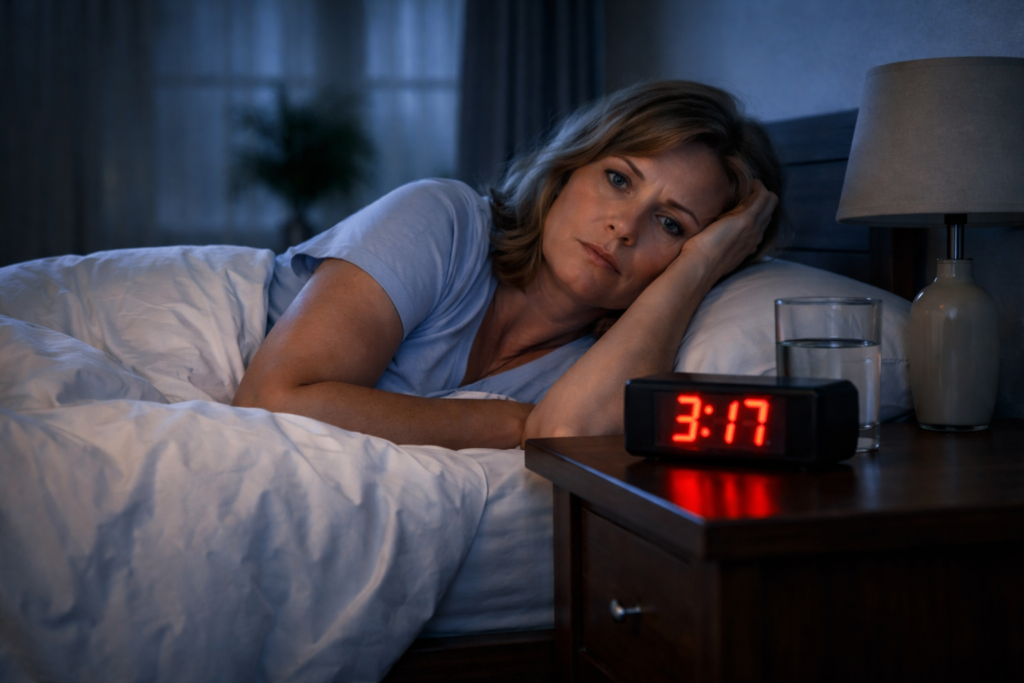
Waking up in the middle of the night can feel frustrating, especially when you struggle to fall back asleep. It breaks your sleep cycle and leaves you feeling tired the next day.
While occasional wake-ups are normal, frequent interruptions are usually a sign that something is affecting your sleep quality.
Understanding the cause is the first step to fixing it.
If you often struggle with falling back asleep after waking up, this guide on how to stop waking up at night and fall back asleep fast explains what to do in the moment.
Not All Night Wakings Are the Same
Waking up during the night doesn’t always mean something is wrong.
But the reason behind it matters.
Some people wake up briefly and fall back asleep easily. Others wake up fully and stay awake for long periods.
These are completely different situations.
If you treat them the same way, you’ll struggle to fix the problem.
Understanding what type of wake-up you’re experiencing is the first step toward solving it.
Your Sleep Cycle Is Being Interrupted
Your body moves through different sleep stages throughout the night. Waking up can happen naturally between cycles, but frequent disruptions prevent deep, restorative sleep.
• Light Sleep Phases
• Sudden Noise Or Movement
• Stress Or Mental Activity
If these interruptions happen often, they reduce overall sleep quality.
If you wake up feeling tired even after sleeping, this article on why you wake up tired even after 8 hours explains how sleep disruption affects your energy.
Your Environment Is Disrupting Your Sleep
External factors are one of the most common reasons for waking up during the night.
Even small disturbances can pull you out of deeper sleep stages.
• Noise Changes
• Light Exposure
• Room Temperature Fluctuations
Your brain stays alert to these changes, even when you’re asleep.
If your setup isn’t optimized, this guide on how to create the perfect sleep environment complete setup guide shows what to fix.
If noise is a recurring issue, using white noise machine for deep uninterrupted sleep can help create a consistent background sound that prevents sudden disturbances from waking you up.
Your Stress Levels Are Affecting Your Sleep
Stress doesn’t just affect how you fall asleep. It also affects how well you stay asleep.
When your mind is under tension, your body remains in a lighter sleep state, making it easier to wake up.
• Racing Thoughts
• Anxiety
• Mental Overload
If stress is a factor, this guide on how stress and anxiety affect your sleep and how to fix it explains how to manage it.
Your Sleep Schedule Is Inconsistent
Your body relies on a predictable sleep rhythm. When your schedule changes frequently, your sleep cycles become unstable.
• Irregular Bedtimes
• Sleeping In On Weekends
• Changing Sleep Patterns
This can cause you to wake up at random points during the night.
This article on why you should go to bed at the same time every night explains how consistency stabilizes your sleep.
The Most Common Types of Night Wakings
Most nighttime wake-ups fall into one of these patterns:
• You wake up randomly and fall back asleep quickly
This is usually normal and not a problem
• You wake up and stay awake for a while
This is often stress or mental activation
• You wake up at the same time every night
This usually points to a pattern or habit
• You wake up too early and can’t fall back asleep
This is often linked to sleep timing or stress
Each of these requires a different approach.
Treating them all the same is one of the biggest reasons people stay stuck.
What Most People Get Wrong When They Wake Up at Night
When people wake up in the middle of the night, they often react in ways that make it worse.
Common mistakes include:
• Checking the time immediately
• Looking at their phone
• Trying to force sleep
• Getting frustrated or anxious
• Staying in bed wide awake for too long
These actions increase alertness and make it harder to fall back asleep.
The goal is to stay calm and avoid fully waking your brain.
Why You Wake Up at the Same Time Every Night
If you consistently wake up at the same time, it’s usually not random.
Your body is following a pattern.
This can be caused by:
• Stress or anticipation
• Sleep cycle timing
• Habitual waking patterns
• Environmental triggers
Once your body learns to wake at a certain time, it can repeat the pattern automatically.
Breaking this pattern requires consistency and the right adjustments.
Your Habits Are Causing Night Disruptions
Some habits can trigger wake-ups without you realizing it.
• Late Caffeine Intake
• Heavy Meals Before Bed
• Screen Exposure
These habits interfere with your ability to stay in deeper sleep stages.
Many of these issues are covered in 10 habits that are destroying your sleep quality, which highlights what to fix.
Your Body Is Physically Uncomfortable
Physical discomfort can cause micro-awakenings throughout the night.
You may not fully wake up each time, but it still disrupts your sleep quality.
• Poor Mattress Support
• Uncomfortable Pillow
• Pressure Points
If your sleep setup isn’t supporting your body properly, it can lead to frequent wake-ups.
Using best mattress for back pain and better sleep quality can help reduce discomfort and support deeper, uninterrupted sleep.
When Basic Sleep Advice Doesn’t Fix It
If you’ve already improved your sleep environment and routine but still wake up during the night, the issue may not be your setup.
In many cases, the problem is related to stress, sleep timing, or internal patterns.
This is why simple advice like “make your room darker” doesn’t always work.
Until you address the actual cause, waking up at night will continue.
Focus On Reducing Interruptions, Not Just Falling Asleep
Waking up during the night isn’t random. It’s usually caused by something interrupting your sleep cycles.
When your environment is stable, your habits support sleep, and your schedule stays consistent, your body naturally stays asleep longer.
Fixing these areas can dramatically improve both your sleep quality and how you feel the next day.
If there’s one habit that reduces nighttime wake-ups more than anything else, it’s maintaining a consistent sleep schedule.
Going to bed and waking up at the same time every day helps your body stay in stable sleep cycles.
Without this, your sleep becomes more fragmented and unpredictable.
When It Might Be Something Deeper
If you keep waking up during the night and nothing seems to improve, the issue may not be your habits or environment.
Sometimes, disrupted sleep is linked to underlying factors that aren’t immediately obvious.
These can include:
• Breathing disruptions during sleep
• Ongoing mental or emotional stress
• Changes in hormones or sleep regulation
• Other health-related factors affecting sleep cycles
In these cases, improving your routine alone won’t fully solve the problem.
If your sleep continues to feel broken despite consistent effort, it’s a sign that something deeper may be affecting your ability to stay asleep.