This article contains affiliate links. As an Amazon Associate, I earn from qualifying purchases at no extra cost to you.
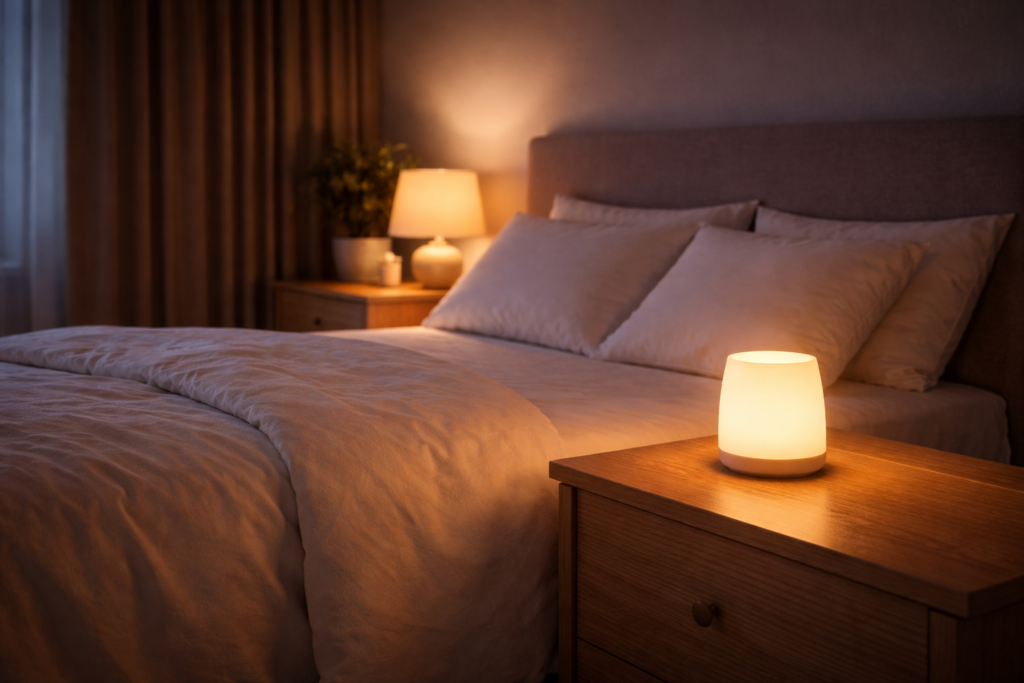
If you need some light at night but still want high-quality sleep, choosing the right night light makes a bigger difference than you might expect. Many people rely on small lights for comfort, visibility, or safety, but the wrong type of lighting can disrupt your sleep cycle without you realizing it.
Your body is highly sensitive to light, especially at night. Bright or harsh lighting can interfere with melatonin production, making it harder to fall asleep and stay asleep. Even low levels of the wrong type of light can affect how deeply you rest.
This is why choosing a sleep-friendly night light is important. The goal is to provide just enough visibility without interfering with your body’s natural sleep process.
If your lighting setup isn’t fully optimized yet, it may also help to explore best lighting for better sleep what to avoid at night, since your entire lighting environment plays a role in sleep quality.
How Light Affects Your Sleep Cycle
Your body uses light as a signal to regulate your sleep-wake cycle. When exposed to bright or blue-toned light, your brain reduces melatonin production and stays in a more alert state.
At night, this can make it harder to relax.
• Bright Light Delays Sleep Signals
• Blue Light Disrupts Melatonin Production
• Inconsistent Lighting Confuses Your Body Clock
• Even Low Light Can Affect Sleep Quality
This is why choosing the right type of light is more important than simply reducing brightness.
Best Night Light for Sleep-Friendly Lighting
If you need a light during the night, the key is choosing one that minimizes disruption.
A strong option is sleep-friendly night light with warm low-intensity glow for nighttime use, which provides enough visibility without overstimulating your brain.
These lights are designed to reduce blue light exposure and create a softer, more calming environment.
Why Color Temperature Matters
Not all light is equal. The color of the light has a direct impact on how your body responds.
• Warm Light (Yellow/Amber) → Best For Sleep
• Cool Light (White/Blue) → Stimulates Alertness
• Dim Light → Less Disruptive Overall
Choosing a warm-toned night light helps maintain your body’s natural rhythm while still giving you visibility.
When You Should Use a Night Light
Not everyone needs a night light, but it can be helpful in certain situations.
• Getting Up During The Night
• Navigating A Dark Room Safely
• Reducing Anxiety Around Darkness
• Supporting Children Or Shared Spaces
The key is to use it in a way that supports your sleep rather than disrupting it.
Alternative Solution: Complete Darkness
In some cases, eliminating light completely is the better option. Your body naturally sleeps best in a dark environment.
Using something like sleep mask for complete darkness and better sleep quality can block out all light sources and create a more controlled sleep environment.
This is especially useful if your room cannot be fully dark.
For a deeper setup, it may also help to explore best sleep masks for complete darkness block light and sleep better.
How Blackout Curtains Support Better Sleep
Even if your night light is optimized, outside light can still affect your sleep.
Using something like blackout curtains for bedroom with full light blocking and thermal insulation helps eliminate external light and create a consistent sleep environment.
This works especially well if you live in a bright area or deal with early morning sunlight.
For a full setup, it may also help to explore best blackout curtains for a perfect sleep environment.
Common Mistakes People Make
Even when using night lights, certain mistakes can reduce their effectiveness.
• Using Lights That Are Too Bright
• Choosing Blue Or White Light Instead Of Warm Tones
• Leaving Lights On All Night Without Need
• Ignoring Other Light Sources
Small adjustments can make a noticeable difference in sleep quality.
Who Night Lights Are Best For
Night lights can be helpful for:
• People Who Wake Up During The Night
• Light-Sensitive Sleepers
• Those Who Feel Anxious In Complete Darkness
• Households With Shared Spaces
If used correctly, they can improve comfort without sacrificing sleep quality.
How to Get the Best Results
To maximize benefits, your night light should be part of a complete sleep setup.
• Keep Lighting Warm And Low
• Use Darkness Where Possible
• Combine With Other Sleep Improvements
• Maintain A Consistent Routine
For better overall results, combining this with guidance from how to fall asleep faster naturally without medication can improve your sleep consistency.
When a Night Light Isn’t Necessary
In some cases, you may not need a night light at all. If your environment is already safe and comfortable, complete darkness is often the best option.
Reducing unnecessary light exposure allows your body to fully relax and stay in deeper sleep stages throughout the night.