
This article contains affiliate links. As an Amazon Associate, I earn from qualifying purchases at no extra cost to you.
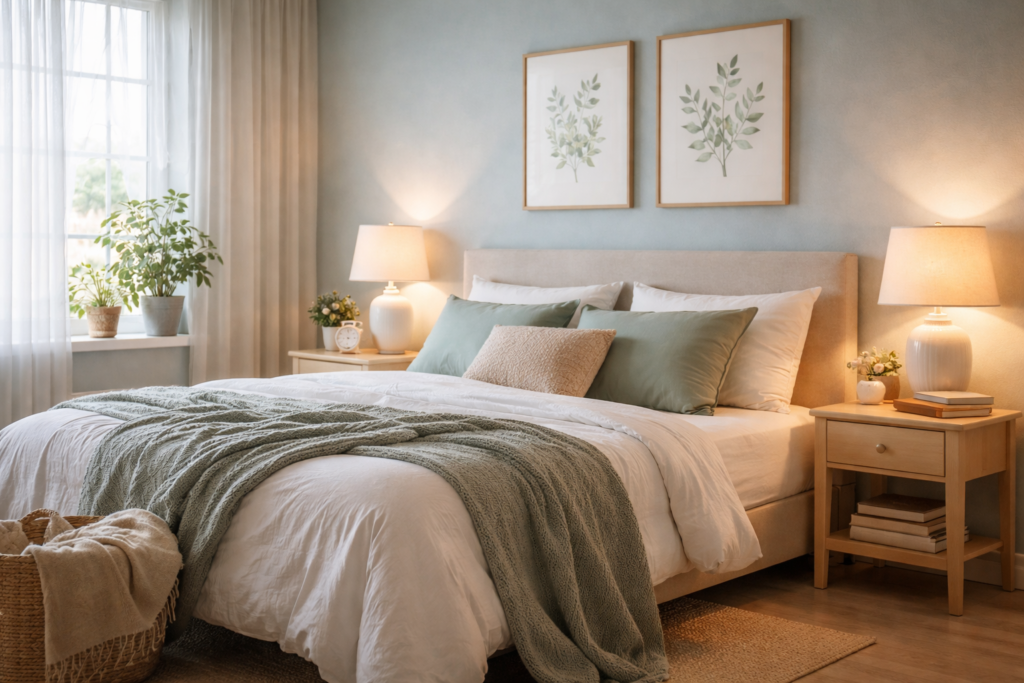
The colors in your bedroom do more than influence how your space looks. They directly affect how your mind and body respond when it’s time to relax.
Certain colors help reduce mental stimulation and create a calm atmosphere, while others can quietly increase alertness without you realizing it. When your environment supports relaxation, falling asleep becomes easier and your overall sleep quality improves.
If your setup isn’t fully optimized yet, this guide on how to create the perfect sleep environment complete setup guide explains how all elements work together.
Why Colors Affect Your Sleep
Colors influence your mood, energy levels, and how your brain processes your surroundings. Your bedroom should signal rest, not activity.
Cool and neutral tones tend to calm your nervous system, while bright or intense colors can keep your brain engaged longer than it should be.
• Soft Colors Promote Relaxation
• Bright Colors Increase Alertness
• Neutral Tones Reduce Visual Stimulation
Even subtle differences in tone can affect how quickly your body transitions into sleep mode.
If you find yourself struggling to relax at night, this guide on why you can’t fall asleep even when you’re tired explains how multiple factors can interfere with that process.
Best Colors for a Calming Bedroom
Some colors are consistently associated with better sleep because they naturally reduce mental stimulation.
• Soft Blues – Help Lower Stress and Slow the Mind
• Muted Greens – Create a Natural, Relaxing Feel
• Warm Neutrals – Provide a Calm, Balanced Environment
• Light Grays – Keep the Space Quiet and Uncluttered
These colors work because they don’t demand attention. Instead, they allow your mind to settle without distraction.
Darker shades can also work if they are muted and not overly saturated, creating a more enclosed and cozy environment that supports rest.
Colors to Avoid Before Bed
Some colors can make your brain feel more alert, even if you don’t consciously notice it.
• Bright Red – Stimulating and Energizing
• Neon Colors – Overwhelming for the Eyes
• High Contrast Designs – Increase Mental Activity
These colors are better suited for active spaces, not areas designed for sleep.
If your bedroom feels visually busy or overstimulating, your brain may take longer to fully relax.
How to Apply Sleep-Friendly Colors
You don’t need to completely redesign your bedroom to benefit from better color choices. Small changes can have a noticeable impact.
• Use Calming Bedding Colors
• Add Soft-Toned Curtains
• Keep Walls Light and Neutral
Using blackout curtains for a perfect sleep environment not only blocks outside light but also allows you to maintain a consistent, calming color palette throughout your space.
Create a Balanced and Simple Environment
Color works best when combined with simplicity. Even calming colors won’t help if your room feels cluttered or chaotic.
• Keep Decor Minimal
• Avoid Excess Patterns
• Maintain a Clean Layout
A simple environment reduces visual stimulation, making it easier for your brain to associate your bedroom with rest.
Pair Colors With Proper Lighting
Color and lighting work together more than most people realize. Even the best color choices can feel harsh under bright or cool lighting.
If your lighting setup isn’t ideal, this guide on best lighting for better sleep what to avoid at night explains how to adjust it properly.
Using night lights that won’t disrupt your sleep can help maintain a soft, warm glow that complements your color choices and supports relaxation.
How Your Brain Associates Color With Rest
Over time, your brain builds associations with your environment. If your bedroom consistently feels calm and visually balanced, your brain starts recognizing it as a place for rest.
On the other hand, if your space feels stimulating or inconsistent, it can delay your ability to relax.
Creating a cohesive color scheme helps reinforce this association, making it easier to fall asleep naturally night after night.
Small Changes Can Improve Sleep Quickly
You don’t need perfect design to improve your sleep. Small, intentional changes can make a real difference.
When your environment feels calm and supportive, your body responds naturally.
The goal isn’t perfection. It’s creating a space that allows you to relax without effort.