This article contains affiliate links. As an Amazon Associate, I earn from qualifying purchases at no extra cost to you.
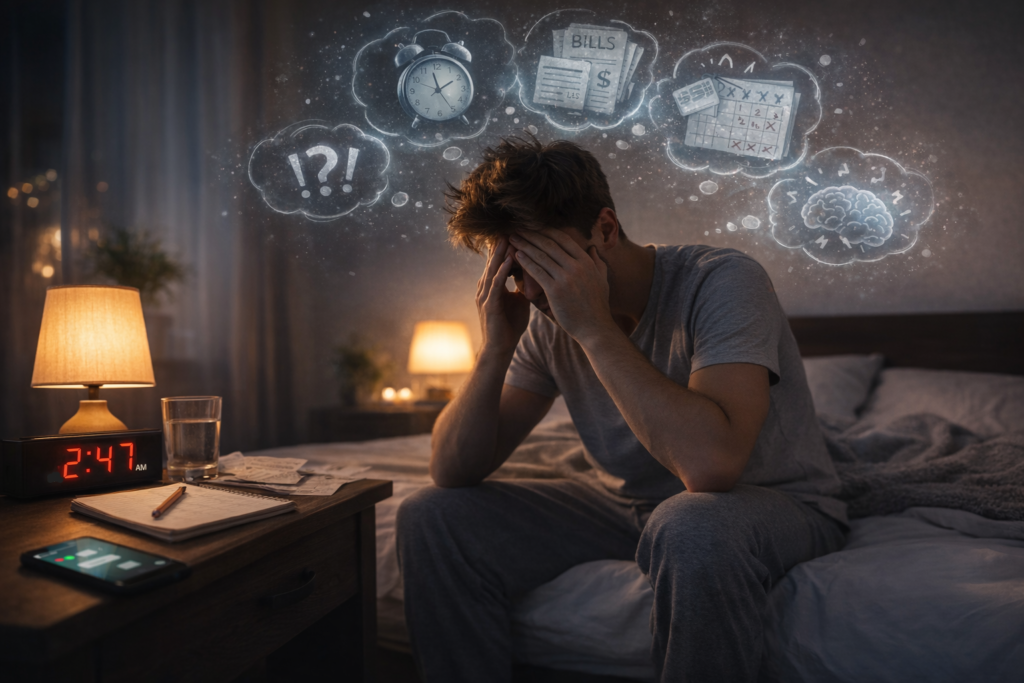
You’re exhausted, your body feels tired, but the moment your head hits the pillow, your mind refuses to shut off. You lie there, staring at the ceiling, wondering why you can’t fall asleep even though you feel drained.
This is one of the most frustrating sleep problems because it feels like your body and brain are completely out of sync. You know you need sleep, but something is blocking it.
The truth is, being tired and being ready to sleep are not the same thing. Sleep depends on a combination of physical fatigue, mental calmness, and proper timing. When even one of these is off, falling asleep becomes difficult.
If this happens often, it may also help to understand how to fall asleep faster naturally without medication, since the issue is usually tied to deeper habits.
Feeling Tired Doesn’t Mean You’re Ready for Sleep
One of the most confusing parts of sleep is feeling exhausted but still unable to fall asleep.
Most people assume that being tired automatically means the body is ready to sleep.
That’s not always true.
There’s a difference between physical fatigue and mental alertness.
You can feel drained from the day, but if your brain is still active, your body won’t transition into sleep easily.
This is why you can lie in bed feeling tired, yet remain fully awake.
Until both your body and mind are ready at the same time, falling asleep will feel difficult.
Your Brain Is Still Active
One of the most common reasons you can’t fall asleep is that your mind is still stimulated. Even if your body feels tired, your brain may still be processing information, thinking, or reacting to stress.
This often happens after:
• Using Your Phone Or Screens Before Bed
• Thinking About Work Or Responsibilities
• Feeling Stressed Or Anxious
• Consuming Too Much Information Late At Night
Your brain needs time to slow down before sleep. If it stays active, your body cannot fully transition into a restful state.
Your Sleep Timing Is Off
Sleep is controlled by your internal clock, also known as your circadian rhythm. If your schedule is inconsistent, your body may not be ready to sleep when you expect it to be.
You might feel tired, but your body is not in its natural sleep window yet.
This can happen when:
• You Go To Bed At Different Times Each Night
• You Nap Too Late In The Day
• You Stay Up Late On Some Days And Not Others
Building a consistent sleep schedule helps your body recognize when it is time to rest.
Stress and Anxiety Are Blocking Sleep
Even small amounts of stress can interfere with your ability to fall asleep. When your body is in a heightened state, it produces stress hormones that keep you alert.
This creates a situation where you feel tired but mentally restless.
If stress is a regular issue, it may help to explore how stress and anxiety affect your sleep and how to fix it, since managing your mental state is just as important as physical rest.
Why Your Brain Won’t “Switch Off” at Night
A common frustration is feeling like your mind becomes more active the moment you lie down.
This happens because your brain finally has space to process everything it ignored during the day.
Instead of slowing down, it speeds up.
You may notice:
• Thoughts become more noticeable
• You replay conversations or plan ahead
• Small concerns feel bigger than they should
This isn’t random.
It’s a sign your brain hasn’t had enough downtime earlier in the day.
Trying to force sleep in this state rarely works, because the issue isn’t sleep itself, it’s mental overstimulation.
Your Sleep Environment Isn’t Helping
Your environment plays a bigger role than most people realize. Even small factors can make it harder for your body to relax.
Common issues include:
• Room Being Too Warm Or Too Cold
• Too Much Light Or Noise
• Uncomfortable Mattress Or Pillow
• Poor Air Circulation
Improving your setup can make it easier for your body to transition into sleep. Adjusting things like best lighting for better sleep what to avoid at night can have an immediate effect.
What Most People Get Wrong When They Can’t Fall Asleep
When sleep doesn’t come easily, most people respond in ways that make the problem worse.
Common mistakes include:
• Going to bed earlier hoping to “catch sleep”
• Lying in bed awake for long periods
• Checking the time repeatedly
• Trying to force sleep instead of allowing it
• Changing multiple habits at once
These actions increase pressure around sleep.
The more you try to force it, the more alert your brain becomes.
Sleep works best when it’s allowed to happen naturally, not when it’s chased.
How to Identify What’s Actually Causing the Problem
If you can’t fall asleep, your situation usually falls into one of these patterns:
• You feel tired but your mind is active
This is usually a mental overstimulation issue
• You go to bed early but lie awake for a long time
This is often a timing mismatch
• You fall asleep eventually but it takes too long
This is often inconsistent sleep rhythm
• You feel alert at night and tired in the morning
This points to a disrupted internal clock
Once you identify which pattern fits, the solution becomes much clearer.
You’re Relying on Being “Tired Enough”
Many people believe they will fall asleep easily if they are tired enough. But sleep does not work that way.
Being overly tired can actually make it harder to fall asleep because your body becomes more stressed and alert.
Instead of waiting until you are exhausted, focus on creating the right conditions for sleep.
Your Evening Habits Are Working Against You
What you do in the hours before bed directly affects how easily you fall asleep. Certain habits can keep your body in an alert state.
• Drinking Caffeine Too Late In The Day
• Using Bright Screens Before Bed
• Eating Heavy Meals Late At Night
• Not Giving Yourself Time To Wind Down
Creating a consistent routine helps signal to your body that it is time to sleep.
How to Fix It and Fall Asleep Faster
Fixing this issue is about aligning your body and mind so they are ready for sleep at the same time.
• Create A Consistent Sleep Schedule
• Reduce Screen Time Before Bed
• Build A Relaxing Night Routine
• Keep Your Room Cool And Dark
• Manage Stress Before Sleeping
Small changes can make a big difference when applied consistently.
When It Becomes a Pattern
If this happens occasionally, it is usually linked to temporary stress or routine changes. But if it happens regularly, it may indicate a deeper sleep issue.
Patterns like this can develop into ongoing sleep problems if not addressed early.
If you notice it happening frequently, understanding is insomnia permanent or can it be fixed can give you a clearer perspective.
When Common Sleep Advice Doesn’t Work
If you’ve already tried improving your routine, reducing screen time, and going to bed earlier without success, the issue may not be your habits.
In many cases, the problem is that your body isn’t properly aligned with your sleep timing.
This is why doing “all the right things” can still lead to lying awake.
Sleep advice often assumes your rhythm is correct, when in reality, it’s often the root problem.
Until your timing and mental state are aligned, sleep will continue to feel difficult.
How to Reset Your Sleep Naturally
The goal is not to force sleep, but to create the right conditions for it to happen naturally.
Focus on:
• Consistent Daily Habits
• Better Sleep Environment
• Reduced Mental Stimulation
• Balanced Energy Throughout The Day
When your body and mind are aligned, falling asleep becomes much easier and more natural.
One of the most effective ways to fix this is by stabilizing your wake-up time.
Waking up at the same time every day trains your body to feel sleepy at the right time at night.
Without this consistency, your body never fully learns when to switch into sleep mode.
This is why many people struggle at night even when they feel tired.
When This Isn’t Just a Habit Issue
If you consistently struggle to fall asleep even when tired, and nothing improves despite fixing your routine, the issue may go beyond sleep habits.
In some cases, difficulty falling asleep is linked to:
• Insomnia or sleep disorders
• Anxiety or depression
• Hormonal imbalances
• Chronic stress or underlying health conditions
These can interfere with your ability to transition into sleep, even when your body feels tired.
If your situation doesn’t improve after addressing the basics, it’s worth looking deeper instead of continuing to adjust your routine.