This article contains affiliate links. As an Amazon Associate, I earn from qualifying purchases at no extra cost to you.
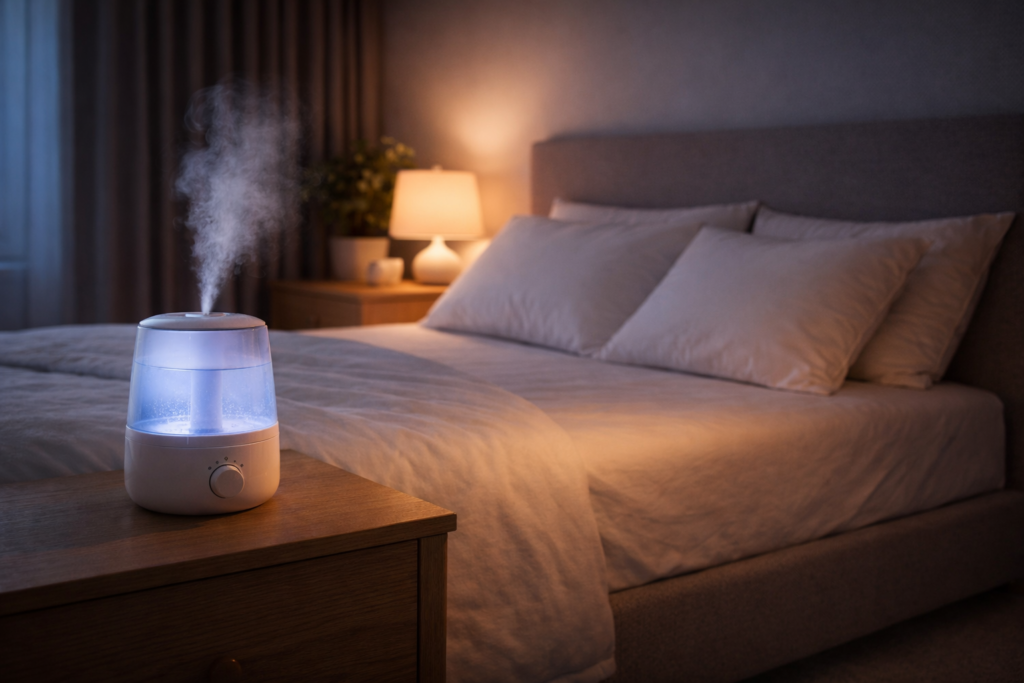
If you wake up with a dry throat, stuffy nose, or irritated sinuses, the air in your bedroom could be the problem. Dry indoor air can affect your breathing, disrupt your sleep, and leave you feeling uncomfortable throughout the night.
This is especially common in air-conditioned environments or during colder months when indoor humidity drops. When the air is too dry, it can irritate your airways and make it harder to breathe comfortably while sleeping.
Humidifiers help solve this by adding moisture back into the air, creating a more balanced and comfortable environment for your body. This can improve breathing, reduce irritation, and help you sleep more consistently.
If your sleep environment is not fully optimized yet, it may also help to explore how to create the perfect sleep environment complete setup guide, since air quality is just one part of the bigger picture.
How Dry Air Affects Your Sleep
Dry air can impact your sleep more than you might expect. When your airways become irritated, your body has to work harder to breathe comfortably.
This can lead to restless sleep and frequent wake-ups.
• Causes Dry Throat And Nasal Irritation
• Makes Breathing Less Comfortable
• Can Increase Snoring
• Disrupts Deep Sleep Cycles
Improving humidity levels helps your body relax and maintain more consistent breathing throughout the night.
Best Humidifier for Better Breathing and Sleep
If your main goal is to improve breathing and reduce dryness, you need a humidifier that provides consistent moisture without over-humidifying your room.
A strong option is humidifier for bedroom with adjustable mist levels and quiet operation, which helps maintain balanced humidity while staying unobtrusive during sleep.
This type of humidifier is ideal for creating a more comfortable breathing environment without adding noise or distraction.
Why Balanced Humidity Matters
While adding moisture is helpful, too much humidity can create its own problems. The goal is to find a balanced level that supports comfort without causing excess moisture.
• Low Humidity → Dryness And Irritation
• High Humidity → Discomfort And Potential Mold
• Balanced Levels → Optimal Sleep Environment
Maintaining the right balance ensures your room feels comfortable and supports better sleep.
Alternative Solution: Air Purifiers
In some cases, air quality issues are not just about dryness. Dust, allergens, and pollutants can also affect your breathing and sleep.
Using something like air purifier for bedroom with HEPA filtration for cleaner air can help remove particles that irritate your airways.
This works especially well if you deal with allergies or poor air circulation.
For a deeper comparison, it may also help to explore humidifier vs air purifier for sleep which one do you need.
How Noise Can Still Affect Your Sleep
Even though humidifiers improve air quality, noise can still be a factor if your environment is not fully optimized.
Some humidifiers produce a slight hum, which can either be soothing or distracting depending on your sensitivity.
Using something like white noise machine for deep sleep with continuous non-looping sound can help mask unwanted sounds and create a more stable sleep environment.
This becomes especially useful if you are sensitive to noise.
Common Mistakes People Make
Even when using a humidifier, certain mistakes can reduce its effectiveness.
• Setting Humidity Too High
• Not Cleaning The Device Regularly
• Using It In A Poorly Ventilated Room
• Ignoring Other Environmental Factors
Maintaining your humidifier properly ensures it continues to improve your sleep instead of causing issues.
Who a Humidifier Is Best For
Humidifiers are especially useful for people who experience dryness or breathing discomfort at night.
• People With Dry Throat Or Sinuses
• Those Who Snore Due To Dry Air
• Individuals In Air-Conditioned Environments
• Anyone Experiencing Irritation While Sleeping
If your breathing feels uncomfortable at night, improving humidity can make a noticeable difference.
How to Get the Best Results
To maximize the benefits, your humidifier should be part of a complete sleep setup.
• Maintain Balanced Humidity Levels
• Keep Your Room Clean And Ventilated
• Combine With Other Sleep Improvements
• Use It Consistently
For better overall results, combining this with guidance from how to fall asleep faster naturally without medication can improve your sleep consistency.
How Your Sleep Environment Works Together
Your sleep quality is influenced by multiple factors working together. Air quality, temperature, lighting, and comfort all play a role.
Improving just one area can help, but combining multiple improvements produces the best results.
• Air Quality Supports Comfortable Breathing
• Darkness Helps Regulate Sleep Hormones
• Temperature Affects Restfulness
If your setup is not fully optimized, improving these areas together will lead to better sleep overall.
When a Humidifier Isn’t Enough
While humidifiers are highly effective, they are not a complete solution for every sleep issue.
If your sleep problems are caused by stress, habits, or other factors, additional changes will be needed.
In those cases, focusing on both your environment and your routine will produce the best long-term results.