This article contains affiliate links. As an Amazon Associate, I earn from qualifying purchases at no extra cost to you.
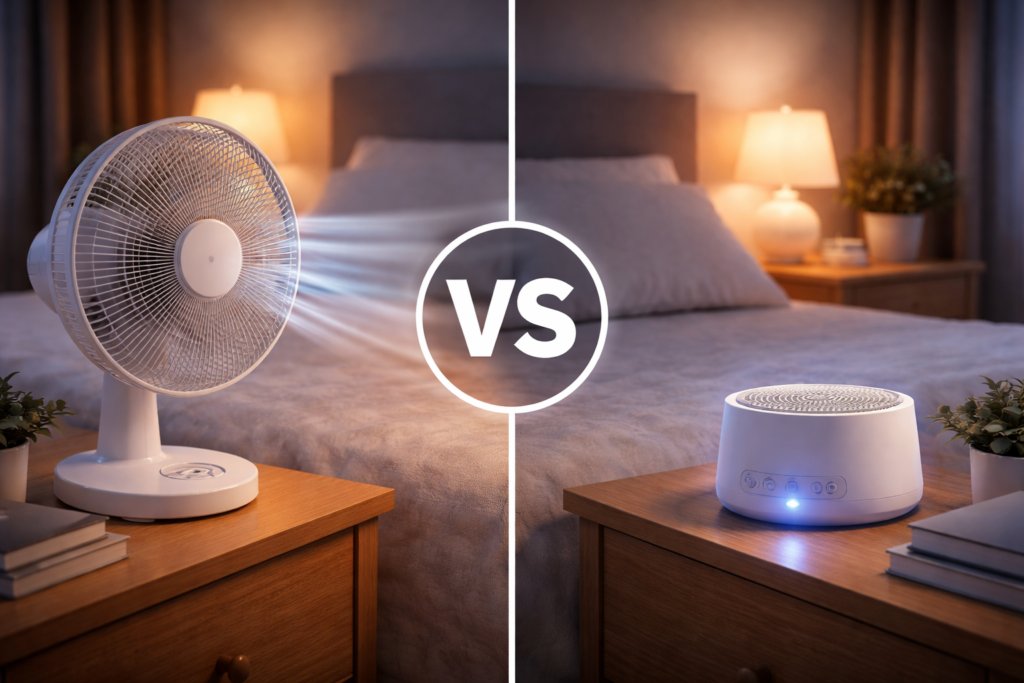
White noise vs fan for sleeping is a common question, especially if you struggle with falling asleep or staying asleep through the night.
Both are used to create background noise, reduce disturbances, and improve sleep quality. But they work in slightly different ways, and choosing the right one depends on what’s actually disrupting your sleep.
Some people need consistent sound to block noise, while others benefit more from airflow and cooling. Understanding how each option works will help you choose the one that actually improves your sleep instead of just masking the problem.
If your sleep is frequently interrupted, it may also help to understand how to stop waking up at night and fall back asleep fast, since noise is often just one part of the issue.
What White Noise Does for Sleep
White noise is a consistent sound that masks sudden noises like traffic, voices, or movement. Instead of silence being broken by random sounds, everything blends into a steady background.
This helps your brain stay in a more stable sleep state.
Benefits of white noise include:
• Blocks Sudden Environmental Noises
• Helps You Fall Asleep Faster
• Creates A Consistent Sleep Environment
• Reduces Sleep Interruptions
White noise works especially well if your sleep is disturbed by unpredictable sounds.
What a Fan Does for Sleep
A fan creates both sound and airflow, which can improve sleep in multiple ways. The sound acts similarly to white noise, while the airflow helps regulate body temperature.
Benefits of using a fan include:
• Provides Gentle Background Noise
• Improves Air Circulation
• Helps Keep You Cool At Night
• Creates A More Comfortable Sleep Environment
For people who tend to overheat, a fan can solve two problems at once.
White Noise vs Fan: Key Differences
While both options can improve sleep, they are not identical.
White noise is designed specifically for sound consistency, while a fan provides both sound and physical comfort.
Main differences:
• White Noise Focuses On Sound Masking Only
• Fan Provides Both Noise And Cooling
• White Noise Is More Consistent In Tone
• Fan Noise Can Vary Depending On Speed
Your choice depends on whether noise, temperature, or both are affecting your sleep.
When White Noise Is the Better Choice
White noise is ideal if your main problem is noise disruption.
• You Live In A Noisy Environment
• You Wake Up Easily From Sounds
• You Need Consistent Audio Masking
• You Do Not Struggle With Overheating
If external noise is your biggest issue, white noise is usually the more effective solution.
For a more controlled experience, using white noise machine for deep sleep with adjustable sound settings allows you to customize the sound level and tone based on your environment.
When a Fan Is the Better Choice
A fan is better suited for people who deal with both noise and temperature issues.
• You Tend To Sleep Hot
• Your Room Feels Stuffy Or Warm
• You Prefer Natural Airflow
• You Want A Simple, Multi-Purpose Solution
A fan works well in warmer climates or during hotter seasons when cooling becomes a priority.
A simple upgrade like quiet tower fan for bedroom with adjustable speed settings can provide steady airflow and gentle background noise without being distracting, making it a practical option for improving sleep in warmer environments.
If overheating is a regular issue, combining airflow with improvements like best mattress for hot sleepers stay cool all night can make a bigger difference.
Can You Use Both Together
You do not have to choose one or the other. Many people benefit from using both a fan and white noise at the same time.
This combination provides:
• Consistent Sound Masking
• Improved Air Circulation
• Better Overall Sleep Environment
Using both can be especially helpful if you are sensitive to noise and temperature changes.
Common Mistakes People Make
Even when using these tools, some habits can reduce their effectiveness.
• Setting The Volume Too High
• Relying On Noise Without Fixing Sleep Habits
• Ignoring Temperature Issues
• Using Inconsistent Sound Sources
Fixing these mistakes can improve results quickly.
How to Choose What Works Best for You
The best option depends on your specific sleep challenges.
Choose white noise if your issue is mainly sound disruption.
Choose a fan if overheating is your main problem.
Use both if you want to maximize comfort and stability.
If your sleep issues go beyond noise or temperature, it may help to explore how stress and anxiety affect your sleep and how to fix it, since deeper causes often play a role.
How to Get the Best Results
To improve sleep consistently, focus on your overall environment.
• Keep Your Room Comfortable And Quiet
• Maintain A Consistent Sleep Routine
• Use Tools That Match Your Specific Needs
• Avoid Overcomplicating Your Setup
When your environment supports your sleep, small changes like adding white noise or a fan can make a noticeable difference.